

Semuliki National Park is one of Uganda’s most fascinating and biologically rich destinations, often described as a bridge between Central and East Africa. Located in the western part of the country within the Albertine Rift Valley, the park is a haven of biodiversity, known for its dense tropical rainforest, hot springs, and unique wildlife. It covers an area of 220 square kilometers and lies on the floor of the Semuliki Valley, bordered by the Democratic Republic of Congo and the Rwenzori Mountains. For tourists seeking an authentic rainforest experience with a touch of adventure and cultural discovery, Semuliki National Park offers a rare blend of natural wonders and traditional heritage.
History and Background
Semuliki National Park was gazetted in 1993, making it one of Uganda’s newer national parks. Before its designation, the area was known as the Toro-Semliki Wildlife Reserve, which was originally established in 1932 to protect its exceptional biodiversity. The park was later upgraded to national park status to conserve the rich lowland rainforest ecosystem, which is part of the vast Ituri Forest that extends into the Congo Basin. This makes Semuliki the only true lowland tropical rainforest in East Africa, providing a unique ecological link between Uganda and Central Africa.
The park’s establishment also aimed to protect the rare flora and fauna found within its borders and to promote eco-tourism as a sustainable means of supporting local communities. Today, Semuliki is managed by the Uganda Wildlife Authority (UWA) and continues to attract tourists, researchers, and conservationists interested in its rare species and remarkable natural features.
Geography and Landscape
Semuliki National Park lies in Bundibugyo District, approximately 52 kilometers from Fort Portal, and sits at an altitude between 670 and 760 meters above sea level. The park’s terrain is largely flat and crisscrossed by numerous rivers, including the Semuliki River, which forms the international boundary between Uganda and the Democratic Republic of Congo. The river eventually drains into Lake Albert and supports a wide range of aquatic life, including hippos and crocodiles.
The landscape of Semuliki is characterized by lush vegetation, swampy valleys, and patches of savanna that merge with the dense rainforest. Towering ironwood and mahogany trees dominate the forest canopy, while ferns, vines, and epiphytes thrive in the humid understory. The area receives heavy rainfall throughout the year, contributing to its evergreen appearance and making it one of Uganda’s most ecologically diverse regions. The surrounding views of the Rwenzori Mountains to the southeast and the Congo Basin to the west add to the park’s striking natural beauty.
Wildlife and Biodiversity
Semuliki National Park is renowned for its exceptional biodiversity and is often described as a fusion of East African and Central African species. The park is home to over 400 bird species and about 60 mammal species, many of which are not found anywhere else in Uganda. This diversity makes it one of the most biologically important areas in East Africa and a must-visit destination for nature enthusiasts.
Among the mammal species in the park are forest elephants, buffaloes, leopards, pygmy hippos, duikers, bush pigs, and water chevrotains. Primates are also common and include chimpanzees, olive baboons, red-tailed monkeys, and black-and-white colobus monkeys. The park’s dense rainforest provides a perfect habitat for these species, and sightings are frequent during guided nature walks.
However, it is the birdlife that truly sets Semuliki apart. The park is one of Uganda’s top birding destinations and forms part of the Albertine Rift Valley Endemic Bird Area. It is home to some of Africa’s most sought-after bird species, including the Nkulengu rail, Congo serpent eagle, lyre-tailed honeyguide, white-crested hornbill, and yellow-throated cuckoo. The rare shoe-bill stork can also be seen in the park’s swampy areas, particularly along the Semuliki River. Birdwatching enthusiasts regard Semuliki as a hidden paradise for discovering forest and swamp species that are otherwise rare in East Africa.
The Sempaya Hot Springs
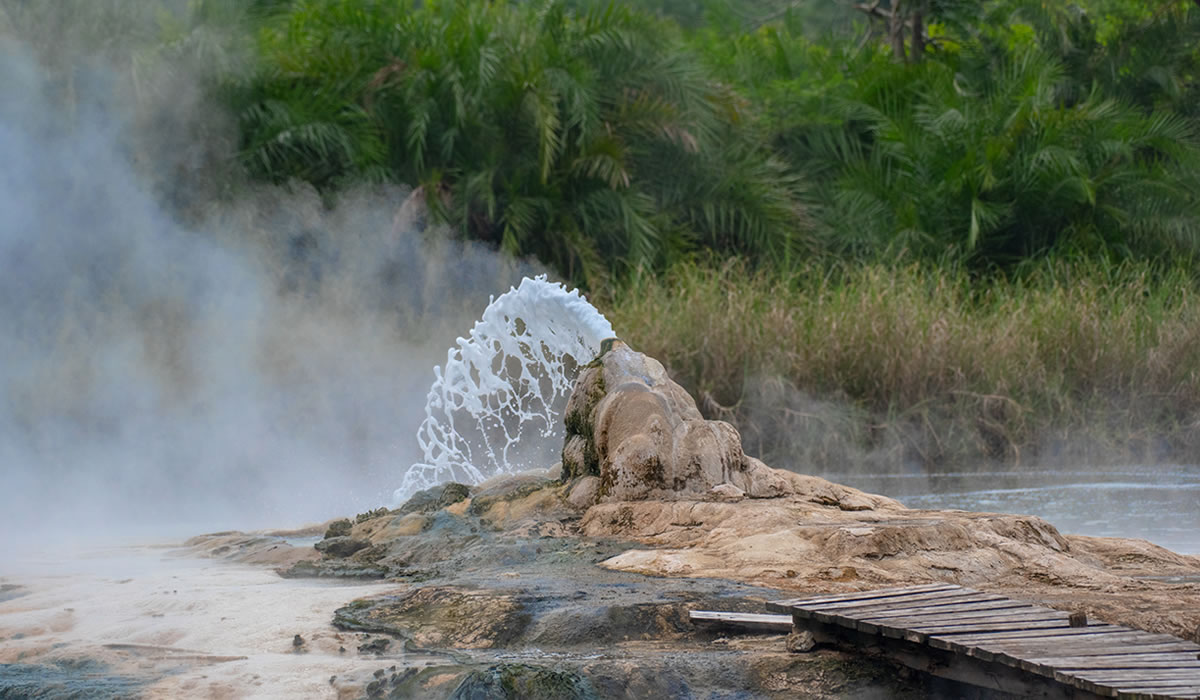
One of the most iconic attractions in Semuliki National Park is the Sempaya Hot Springs, which draw tourists from across Uganda and beyond. The springs are divided into two sites: the female spring (Nyasimbi) and the male spring (Bintente). The female hot spring is the more famous of the two and is located in a clearing surrounded by forest. It features a boiling geyser that shoots steaming water up to two meters high and reaches temperatures of over 100 degrees Celsius.
The springs are not only a geological wonder but also hold deep cultural significance for the local communities. The Bakonzo and Bamba people believe that the springs are sacred and associated with ancestral spirits. During guided tours, tourists can learn about the traditional beliefs surrounding the springs and even boil eggs or plantains in the bubbling water a fun and memorable experience. The short nature trail leading to the springs passes through beautiful forest scenery and offers opportunities to spot monkeys, birds, and butterflies along the way.
Activities in Semuliki National Park
Semuliki National Park offers a variety of activities that appeal to adventure seekers, birders, and cultural enthusiasts alike. One of the most popular is birdwatching, as the park provides access to some of Uganda’s rarest and most colorful bird species. The birding trails, particularly along the Kirumia Trail and the Sempaya area, are ideal for spotting forest and riverine birds. Experienced guides from the Uganda Wildlife Authority accompany tourists, helping them identify different species and explaining their unique behaviors.
Nature walks and forest hikes are another highlight, offering a close-up experience of the park’s flora and fauna. The 13-kilometer Kirumia Trail leads from the main road to the Semuliki River and takes about 8 hours to complete. Along the way, tourists can encounter forest elephants, monkeys, and a variety of bird species. Shorter trails such as the Red Monkey Trail, which runs along the park’s eastern border, offer opportunities to see the rare De Brazza’s monkey, one of the most elusive primates in Uganda.
For those interested in cultural experiences, community visits provide insight into the traditional lifestyles of the Bamba and Bakonzo people who live near the park. These communities rely on subsistence farming and forest resources and maintain rich cultural traditions. Tourists can visit local villages, participate in traditional dances, and learn about local herbal medicine and handicrafts. The Batwa pygmies, who once lived inside the forest, also share their unique forest-based heritage through storytelling and performances that highlight their deep connection to nature.
Accommodation and Lodging
Despite its remote setting, Semuliki National Park offers several accommodation options to suit different budgets. The Semuliki Safari Lodge is the park’s most luxurious facility, located within the Toro-Semliki Wildlife Reserve. It features tented cottages with en-suite bathrooms, excellent cuisine, and breathtaking views of the savanna and mountains. The lodge’s location makes it ideal for game drives and night safaris within the reserve.
For mid-range tourists, options such as Ntoroko Game Lodge and Kirimia Guesthouse provide comfortable lodging with modern amenities. Budget tourists can stay at Bumaga Camp, located near the park headquarters, which offers basic bandas and camping facilities. Visitors can also find accommodation in Fort Portal town, which is about an hour’s drive from the park, with a wide range of lodges and hotels catering to all preferences.
Accessibility and Best Time to Visit
Semuliki National Park is located approximately 300 kilometers from Kampala, Uganda’s capital, and can be reached by road in about 6 to 7 hours. The most common route is via Fort Portal, which passes through scenic landscapes, tea plantations, and views of the Rwenzori Mountains. The park can also be accessed from Queen Elizabeth National Park through Kasese, providing a perfect opportunity to combine both destinations on a single safari.
The park can be visited year-round, but the dry seasons from December to February and June to September are the best for most activities, especially forest hikes and birdwatching. During the wet seasons, from March to May and October to November, the park becomes lush and vibrant, though some trails may be slippery and challenging to navigate. Tourists visiting during this period are rewarded with spectacular greenery and excellent opportunities for photography.
Conservation and Community Involvement
Semuliki National Park is managed by the Uganda Wildlife Authority, which works in partnership with conservation organizations and local communities to protect its fragile ecosystem. Conservation efforts focus on combating illegal activities such as poaching and deforestation while promoting sustainable tourism as an alternative source of income. Community-based tourism projects have been developed to involve local people in conservation and share the benefits derived from tourism.
Revenue from park entry fees and lodge operations supports community development initiatives, including schools, health centers, and clean water projects. By engaging communities in eco-tourism, the park has strengthened conservation awareness and reduced human pressure on natural resources. Tourists are encouraged to practice responsible tourism by respecting park rules, minimizing waste, and supporting locally owned enterprises.
Semuliki National Park is one of Uganda’s most captivating natural treasures, offering a rare glimpse into the Central African rainforest environment. Its rich biodiversity, unique birdlife, and fascinating hot springs make it a destination unlike any other in the country. Whether trekking through the dense forest, birdwatching along the riverbanks, or soaking in the cultural experiences of the Bamba and Batwa people, tourists are guaranteed an unforgettable adventure. The park’s serene atmosphere, pristine nature, and warm hospitality provide a perfect escape for those seeking to reconnect with the wild. For eco-tourists and nature lovers, Semuliki National Park stands as a symbol of Uganda’s incredible ecological diversity and a testament to the importance of conserving Africa’s natural heritage.