

Queen Elizabeth National Park is one of Uganda’s most famous and most visited protected areas, celebrated for its incredible biodiversity, breathtaking landscapes, and rich cultural heritage. Located in western Uganda, the park spans the districts of Kasese, Kamwenge, Rubirizi, and Rukungiri, covering an area of about 1,978 square kilometers. It is Uganda’s second-largest national park after Murchison Falls and forms part of the great Albertine Rift Valley, stretching from Lake George in the northeast to Lake Edward in the southwest. The park is bordered by the Rwenzori Mountains to the north, giving it a stunning backdrop of snow-capped peaks. For tourists looking to explore Uganda’s wildlife, enjoy spectacular scenery, and experience authentic African safaris, Queen Elizabeth National Park offers an unforgettable adventure.
History and Background
Queen Elizabeth National Park was established in 1952 and was originally known as Kazinga National Park. Two years later, it was renamed in honor of Queen Elizabeth II following her visit to Uganda. The park was created to protect the vast ecosystems surrounding the Kazinga Channel and the savanna plains that were teeming with wildlife. Over the years, it has grown into one of Africa’s most diverse and biologically rich parks, drawing tourists from around the world.
The park is part of a larger conservation area that includes Kyambura Wildlife Reserve and Kigezi Game Reserve. Together, they form an important wildlife corridor that connects to Virunga National Park in the Democratic Republic of Congo. This transboundary ecosystem plays a critical role in conserving endangered species and supporting regional tourism initiatives.
Geography and Landscape
The park lies at an altitude between 884 and 1,337 meters above sea level and features a varied landscape of rolling savannas, wetlands, lakes, and crater-filled highlands. The most striking features are Lake George, Lake Edward, and the Kazinga Channel, a natural waterway that connects the two lakes and supports a remarkable concentration of wildlife. The park also contains volcanic craters, forested gorges, and open grasslands that create a scenic mosaic of habitats.
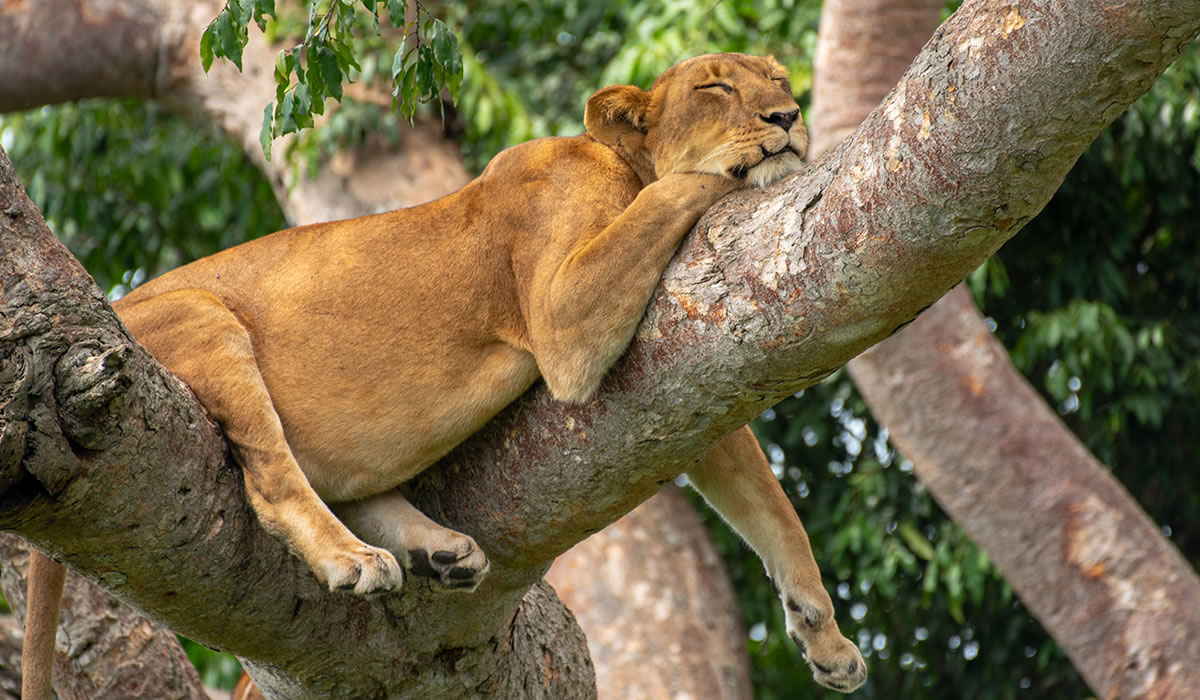
The Katunguru Bridge divides the park into northern and southern sections. The northern section, known as the Mweya Peninsula, is the most popular tourism hub, offering game drives and boat safaris. The southern Ishasha sector is famous for its population of tree-climbing lions, one of the few places in the world where this rare behavior can be observed.
The diverse landscape also supports varied vegetation, including open acacia woodland, riverine forests, papyrus swamps, and crater lakes fringed with fig trees. This ecological diversity makes Queen Elizabeth National Park one of the most scenic and biologically important destinations in East Africa.
Wildlife and Biodiversity
Queen Elizabeth National Park is home to an astonishing variety of wildlife, with over 95 mammal species and more than 600 bird species recorded. This makes it Uganda’s premier destination for wildlife viewing and birdwatching.
Among the park’s notable mammals are elephants, buffaloes, Uganda kobs, hippos, lions, and leopards. Tourists can also encounter giant forest hogs, waterbucks, warthogs, and spotted hyenas. The park’s Ishasha sector is particularly renowned for its tree-climbing lions, which often rest on the branches of large fig trees to escape the heat and avoid biting insects. These lions are a major attraction and a highlight of any visit to the park.
Primates are also well represented, especially in the Kyambura Gorge, a lush forested valley often referred to as the “Valley of Apes.” Here, tourists can track chimpanzees as well as other primates like olive baboons, red-tailed monkeys, and black-and-white colobus monkeys. The nearby Maramagambo Forest is another haven for primate species and forest birds.
The park’s birdlife is among the richest in Africa, with species such as the African fish eagle, malachite kingfisher, pink-backed pelican, shoebill stork, and papyrus gonolek found in the wetlands and along the Kazinga Channel. Migratory birds from Europe and Asia can also be seen between November and April, making the park a year-round birding paradise.
The Kazinga Channel Boat Cruise
One of the most popular and rewarding activities in Queen Elizabeth National Park is the boat cruise along the Kazinga Channel. This two-hour guided trip offers tourists an up-close view of the park’s abundant aquatic wildlife and bird species. The channel hosts one of the largest concentrations of hippos in Africa, as well as numerous Nile crocodiles basking along the banks.
During the cruise, tourists can also observe elephants, buffaloes, and antelopes coming to drink or bathe in the water. Birdwatchers are treated to sights of African jacanas, pied kingfishers, great cormorants, and African skimmers. The experience combines relaxation with thrilling wildlife viewing, and the calm waters of the channel provide perfect opportunities for photography and nature observation.
Game Drives and Wildlife Viewing
Game drives are another highlight of a visit to Queen Elizabeth National Park. The park’s network of game tracks allows tourists to explore different habitats and view wildlife in their natural surroundings. The Kasenyi Plains, located in the northeast, are ideal for spotting large herds of Uganda kobs, which attract predators such as lions and leopards. Early morning and late afternoon drives offer the best chances for viewing active wildlife and capturing the beautiful golden light of the savanna.
The Mweya Peninsula is another excellent game-viewing area, offering opportunities to see elephants, warthogs, and numerous bird species. Night game drives, available in some parts of the park, give tourists the chance to spot nocturnal animals such as genets, civets, and hyenas.
Chimpanzee Tracking in Kyambura Gorge
The Kyambura Gorge, located on the park’s eastern boundary, is one of the most fascinating features of Queen Elizabeth National Park. The gorge is a deep, forested valley carved by the Kyambura River, and it provides a refuge for a small but habituated population of chimpanzees. Guided chimpanzee tracking excursions take tourists into the heart of the gorge, where they can observe the primates feeding, grooming, and playing in their natural habitat. The experience also offers sightings of other primates and birds, making it an excellent complement to traditional savanna safaris.
Cultural Encounters
Queen Elizabeth National Park is surrounded by several vibrant communities that offer enriching cultural experiences. Tourists can visit the Kikorongo Women’s Community, where local women perform traditional dances and showcase handicrafts such as baskets and jewelry. Another highlight is the Katwe Salt Lake, where visitors can learn about traditional salt mining methods that have been practiced for centuries. The process involves harvesting salt crystals from evaporated lake water, an activity that continues to sustain local livelihoods today.
The Agro-Tourism Project in Katara village allows tourists to experience rural farming practices and taste organic local cuisine. These cultural interactions provide deeper insight into the lives of the people living near the park and demonstrate how communities benefit from eco-tourism initiatives.
Accommodation and Lodging
Queen Elizabeth National Park offers a wide range of accommodation options to suit every budget. For luxury tourists, Mweya Safari Lodge and Kyambura Gorge Lodge offer premium facilities, including swimming pools, gourmet dining, and panoramic views of the park’s landscapes. Mid-range options such as Bush Lodge, Elephant Plains Lodge, and Ishasha Wilderness Camp provide comfort and excellent service in scenic settings.
Budget tourists can stay at Simba Safari Camp or Pumba Safari Cottages, which offer affordable and convenient lodging near the park’s main gates. For campers and backpackers, several campsites are available, providing a close-to-nature experience surrounded by the sounds of the wild.
Accessibility and Best Time to Visit
Queen Elizabeth National Park is easily accessible from Kampala, located about 400 kilometers away, with a drive time of roughly 6 to 7 hours via Fort Portal or Mbarara. The park can also be reached by air through charter flights to Mweya or Kasese airstrips.
The best time to visit the park is during the dry seasons from June to September and December to February, when wildlife is concentrated around water sources, making it easier to spot animals. However, the park remains open year-round, and the lush green scenery during the rainy months offers a different kind of beauty and excellent photographic opportunities.
Conservation and Sustainability
The Uganda Wildlife Authority, together with local and international partners, manages Queen Elizabeth National Park with a focus on conservation and community involvement. Efforts are made to combat poaching, manage human-wildlife conflict, and promote sustainable tourism. The park also supports research programs and community projects that improve livelihoods and foster coexistence between people and wildlife.
Tourists are encouraged to practice responsible tourism by minimizing waste, respecting wildlife, and supporting local conservation initiatives. Such practices ensure that future generations can continue to enjoy the park’s natural beauty and ecological richness.
Queen Elizabeth National Park stands as a testament to Uganda’s remarkable natural diversity and commitment to conservation. Its sweeping savannas, rich wildlife, scenic lakes, and vibrant cultures make it a must-visit destination for nature lovers and adventure seekers. Whether you are cruising along the Kazinga Channel, tracking chimpanzees in Kyambura Gorge, or watching lions rest in fig trees in Ishasha, every moment spent in Queen Elizabeth National Park promises an unforgettable experience. For tourists exploring the Pearl of Africa, this park truly embodies the wild heart of Uganda.