

Nestled in the southwestern part of Uganda, Bwindi Impenetrable National Park is one of Africa’s most remarkable conservation areas. Recognized as a UNESCO World Heritage Site, Bwindi is world-famous for its population of endangered mountain gorillas. This dense tropical rainforest, which lies along the border with the Democratic Republic of Congo, attracts thousands of tourists each year who seek an intimate encounter with these gentle primates. The park’s unmatched biodiversity, scenic beauty, and cultural richness make it one of the top Uganda tourist destinations and a must-visit location for nature enthusiasts, wildlife photographers, and adventure seekers.
Location and Geography
Bwindi Impenetrable National Park is located in Kanungu, Kisoro, and Rubanda districts of southwestern Uganda, about 500 kilometers from Kampala, the capital city. The park covers an area of approximately 321 square kilometers and lies within the Albertine Rift Valley, one of Africa’s most ecologically diverse regions. Bwindi’s terrain is rugged and mountainous, with altitudes ranging from 1,160 to 2,607 meters above sea level. The park’s name, “Bwindi,” means “dark place,” referring to the thick vegetation that forms a natural canopy over the forest floor. Its dense undergrowth, tangled vines, and towering trees create a habitat that has remained relatively undisturbed for thousands of years, making it a living museum of evolution and natural history.
Biodiversity and Wildlife
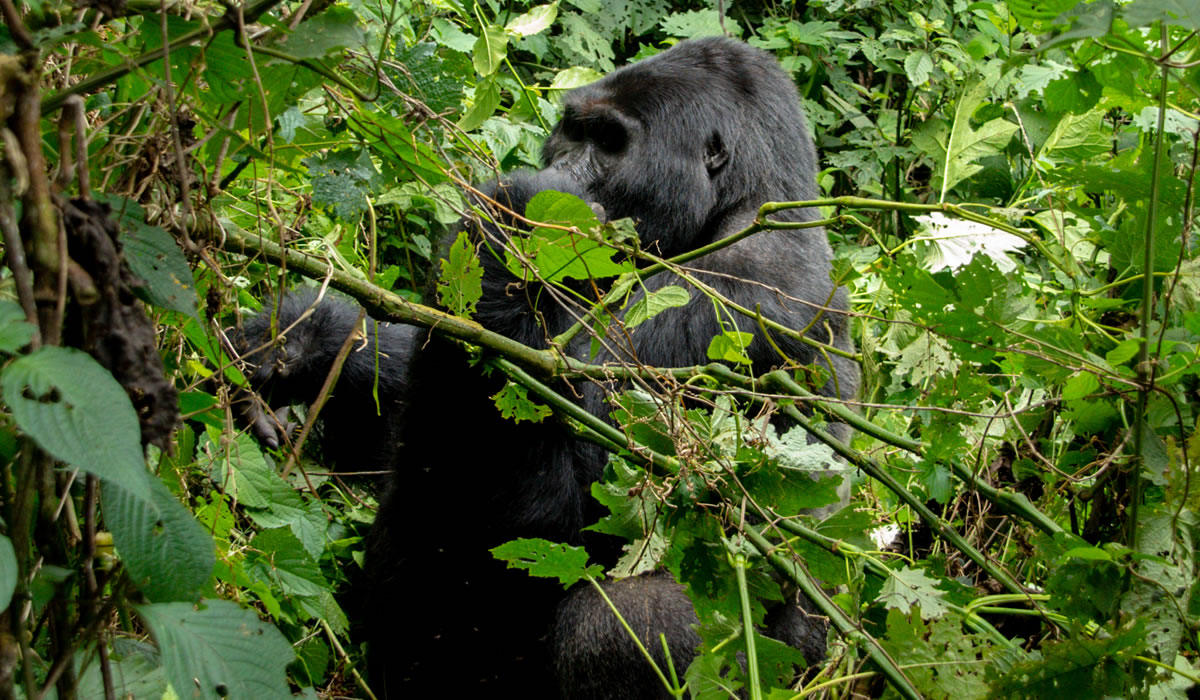
Bwindi Impenetrable National Park is one of the richest ecosystems in Africa. It is home to over 120 species of mammals, 350 species of birds, 220 species of butterflies, and more than 160 species of trees. The park’s biodiversity is supported by its unique combination of lowland and montane rainforest ecosystems, which harbor a variety of wildlife found nowhere else in the world. The most famous residents of Bwindi are the mountain gorillas, which represent almost half of the world’s remaining population. Other primates in the park include black-and-white colobus monkeys, blue monkeys, L’Hoest’s monkeys, and olive baboons. Forest elephants, duikers, bush pigs, and giant forest hogs also inhabit the area, although sightings are rare due to the dense vegetation.
Birdwatchers consider Bwindi a paradise, as it is home to numerous Albertine Rift endemics such as the African green broadbill, Grauer’s rush warbler, and Shelley’s crimsonwing. The park is one of Uganda’s Important Birding Areas (IBAs) and attracts ornithologists from around the world. Its rich flora, including ancient ferns, orchids, and towering hardwoods, further adds to its ecological value.
Mountain Gorilla Trekking Experience
Gorilla trekking is the highlight of any visit to Bwindi Impenetrable National Park. This activity allows tourists to venture deep into the forest in search of habituated gorilla families. The park hosts more than 20 habituated gorilla groups that can be visited in different sectors including Buhoma, Ruhija, Rushaga, and Nkuringo. Each trekking experience is led by experienced guides and trackers who help locate the gorillas while ensuring the safety of both tourists and the animals.
The trek can take between 2 to 8 hours depending on the location of the gorillas, but the moment of encountering a family in their natural habitat is unforgettable. Tourists observe the gorillas for an hour, watching them feed, play, and interact. The intimacy of this experience makes it one of Africa’s most powerful wildlife encounters. Gorilla trekking permits are limited to ensure conservation and minimize human impact on the animals. Currently, a permit costs around 800 USD for foreign non-residents, and bookings should be made well in advance through the Uganda Wildlife Authority or licensed tour operators.
Gorilla Habituation Experience
In addition to standard trekking, Bwindi offers the unique Gorilla Habituation Experience, available mainly in the Rushaga sector. This allows tourists to spend up to four hours with gorillas that are in the process of being habituated to human presence. The activity provides deeper insight into gorilla behavior and conservation efforts. Though more physically demanding, it is a once-in-a-lifetime opportunity for those who want a more immersive experience in the world of mountain gorillas.
Other Activities in Bwindi Impenetrable National Park
While gorilla trekking is the main attraction, Bwindi offers a variety of other activities. Nature walks through the forest allow tourists to explore waterfalls, birding trails, and scenic viewpoints. The Munyaga River Trail, for example, offers a chance to see monkeys and butterflies, while the Mubwindi Swamp Trail in Ruhija is a top birding spot.
Cultural encounters are also an essential part of a visit to Bwindi. The Batwa people, who were the original forest inhabitants, now live in communities near the park and share their traditions through guided cultural tours. Tourists can visit Batwa villages, learn about their hunting and gathering lifestyle, traditional dances, and medicinal plants. This cultural tourism not only enriches the visitor’s experience but also supports local livelihoods and conservation awareness.
Conservation and Community Involvement
Bwindi Impenetrable National Park stands as a model for successful conservation in Africa. The Uganda Wildlife Authority (UWA) and several conservation organizations, including the International Gorilla Conservation Programme (IGCP), work closely with local communities to protect the park’s fragile ecosystem. Revenue from gorilla trekking permits and tourism activities is shared with nearby communities to promote development projects such as schools, healthcare facilities, and infrastructure. This revenue-sharing model encourages local people to support conservation rather than engage in activities like poaching or deforestation.
Community-based tourism initiatives, including locally owned lodges and handicraft cooperatives, provide alternative sources of income. The park’s conservation success story demonstrates the importance of balancing ecological preservation with human welfare, ensuring that both people and wildlife thrive.
Accommodation and Accessibility
Bwindi Impenetrable National Park offers a wide range of accommodation options to suit different budgets. Luxury lodges such as Buhoma Lodge, Gorilla Forest Camp, and Clouds Mountain Gorilla Lodge provide premium comfort with stunning views of the forest. Mid-range and budget options, including community-run campsites and guesthouses, offer affordable stays for tourists who wish to experience authentic local hospitality.
The park can be accessed by road or air. From Kampala or Entebbe, the drive to Bwindi takes about 8 to 10 hours through scenic countryside and national parks such as Queen Elizabeth National Park, where tourists can enjoy game drives along the way. Alternatively, domestic flights operated by AeroLink Uganda and Bar Aviation fly to airstrips at Kihihi or Kisoro, which are only a short drive from the park.
Best Time to Visit Bwindi Impenetrable National Park
The park is open year-round, but the best time for gorilla trekking is during the dry seasons, from June to September and December to February. During these months, trails are less slippery and access to the forest is easier. However, Bwindi’s weather is unpredictable due to its rainforest climate, so light rain can occur at any time. Tourists are advised to carry waterproof gear, sturdy hiking boots, and insect repellent regardless of the season.
Sustainable Tourism and Future Prospects
Bwindi Impenetrable National Park represents the future of sustainable tourism in Uganda. The government and conservation partners are continuously working to ensure that tourism development does not compromise the park’s ecological integrity. Efforts to expand community tourism, reduce plastic waste, and promote eco-friendly accommodations are ongoing. Digital marketing initiatives are also helping to attract international tourists and promote Uganda as a leading eco-tourism destination in Africa.
As global interest in responsible wildlife tourism grows, Bwindi stands as a shining example of how tourism can support conservation. The park’s continued success depends on maintaining this delicate balance and ensuring that every visit contributes positively to both the local communities and the environment.
Bwindi Impenetrable National Park is not only Uganda’s premier tourist attraction but also one of the most important conservation areas in the world. Its mist-covered hills, lush vegetation, and extraordinary wildlife create an unforgettable experience for those who venture into its depths. For tourists seeking an authentic African adventure, a close encounter with the mountain gorillas of Bwindi is a life-changing experience. Beyond the adventure, visiting Bwindi contributes to global conservation efforts and supports the livelihoods of the people who call this unique ecosystem home. Bwindi truly embodies the spirit of wild Uganda, a place where nature and humanity coexist in harmony.